Following on from my previous post about Astrid’s struggles with reading, I’ve been thinking about how we can better track and support her progress. That’s where Evisense’s Reading Diary feature really shines.
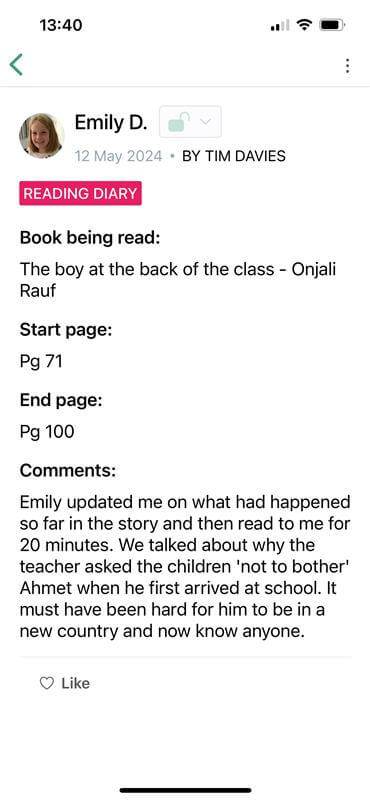
Evisense has a NEW dedicated post type called Reading Diary – a simple but powerful way for both teachers and parents to keep track of how a child is progressing with their reading, something inspired through the last few years of my daughters’ path to reading. Instead of scribbling notes into a traditional reading diary, we can now capture everything digitally. Teachers and parents can add general comments, but here’s where it gets even better: switch to the structured view, and you can enter details like the book title, start and end pages, and comments on how the reading went.
But that’s not all. You can also upload video or audio clips to go along with the diary entry. Imagine being able to actually hear how your child is reading, not just relying on written comments. This would be a game-changer for children like Astrid, allowing us to pinpoint exactly where she’s struggling with phonics or decoding words. And because everything is in one place, it’s easy to keep track of her progress over time.
No more juggling between printed reading diaries and verbal feedback at parents’ evening – teachers can filter by student and post type within Evisense to view all the reading diary entries in one long, structured timeline. This gives a full, clear picture of the reading journey from the very beginning to the present day, alongside any other learning evidence that’s been captured.
For teachers and parents, this feature is invaluable. It brings the reading journey together with all the other learning evidence in Evisense, creating one seamless, digital space. For us, it means no more trying to piece together Astrid’s progress through bits of paper or short comments. Instead, we have a full history of how she’s doing—and the ability to react quicker if things aren’t going as well as we thought.
It’s an exciting step forward in making sure every child’s reading progress is well-documented, understood, and supported.